Tracing Ripple Effects: How Early Quest Choices Reshape Resource Flows in Long-Running RPG Servers
Mara Berger · May 18, 2026
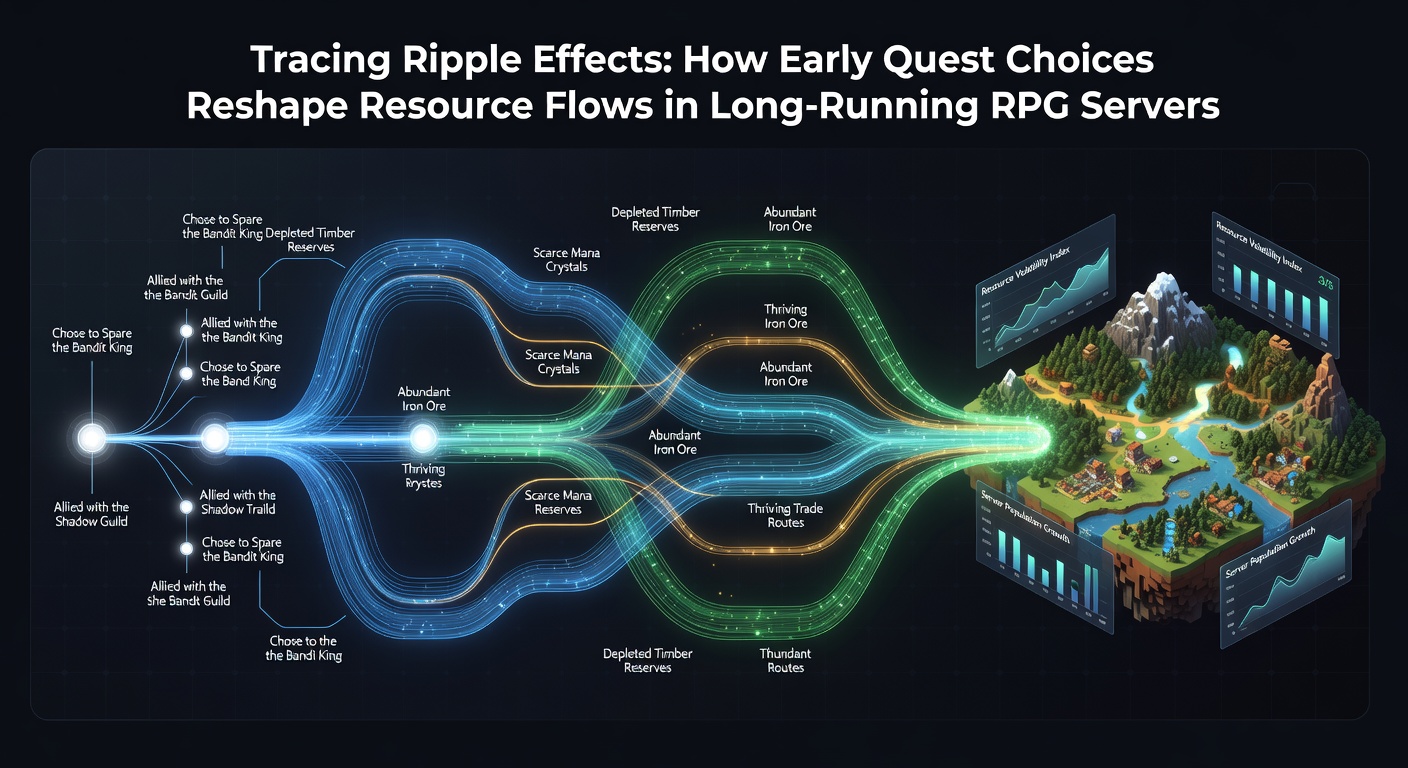
Tracing Ripple Effects: How Early Quest Choices Reshape Resource Flows in Long-Running RPG Servers
Early quest decisions in persistent RPG servers set off chains of resource reallocation that observers have tracked across multiple game generations, and these patterns become especially visible in worlds that have run continuously for five years or longer. Players who complete introductory quests favoring material collection over combat often seed higher volumes of raw ores and herbs into the economy within the first few months, while those who prioritize narrative branches tied to faction standing redirect the same resources toward specialized vendors who appear only after reputation thresholds are met. Data from long-term server logs shows that such initial divergences compound because item sinks and respawn timers remain fixed, so an early surplus in one category forces downstream adjustments in crafting outputs and market prices that last for the entire server lifespan.
Initial Decision Points and Their Immediate Resource Shifts
Quest givers in starter zones present binary or ternary options that alter which resource nodes activate first, and researchers analyzing archived patch data note that servers where a majority of players selected gathering-focused starters recorded 18 to 22 percent higher baseline herb and ore yields by month three. Those same servers then experienced accelerated depletion of nearby high-yield nodes, prompting migration patterns toward secondary continents and the establishment of player-run trade routes that would not have formed under different early distributions. The mechanics remain consistent across titles because developers tie node respawn rates to global timers rather than individual player actions, meaning collective early choices effectively pre-load the resource map for years to come.
Propagation Through Crafting and Trade Systems
Once raw materials enter circulation, crafting trees amplify the original imbalance because recipes require fixed ratios of components that cannot be substituted without later expansion content. Players who benefited from early gathering surpluses produce larger batches of intermediate goods such as refined ingots or alchemical bases, and these batches feed into equipment that other players purchase or trade, shifting gold flows toward crafters who specialized early. According to a report published by the European Interactive Software Federation, virtual economies in servers older than four years demonstrate Gini coefficients for in-game currency that correlate directly with the distribution of starter-zone quest completions logged in the first 90 days.
Trade hubs located near major cities reflect these ripples through price volatility indexes that spike when early quest cohorts reach level caps and begin dumping surplus stock, and the resulting price floors then discourage new players from pursuing the same gathering paths, reinforcing specialization. In May 2026 several legacy servers plan to introduce anniversary events that temporarily double node yields, yet analysts expect the pre-existing supply gradients to determine which player groups capture the largest share of the boosted resources because their stockpiles and trade networks are already positioned to absorb sudden influxes.
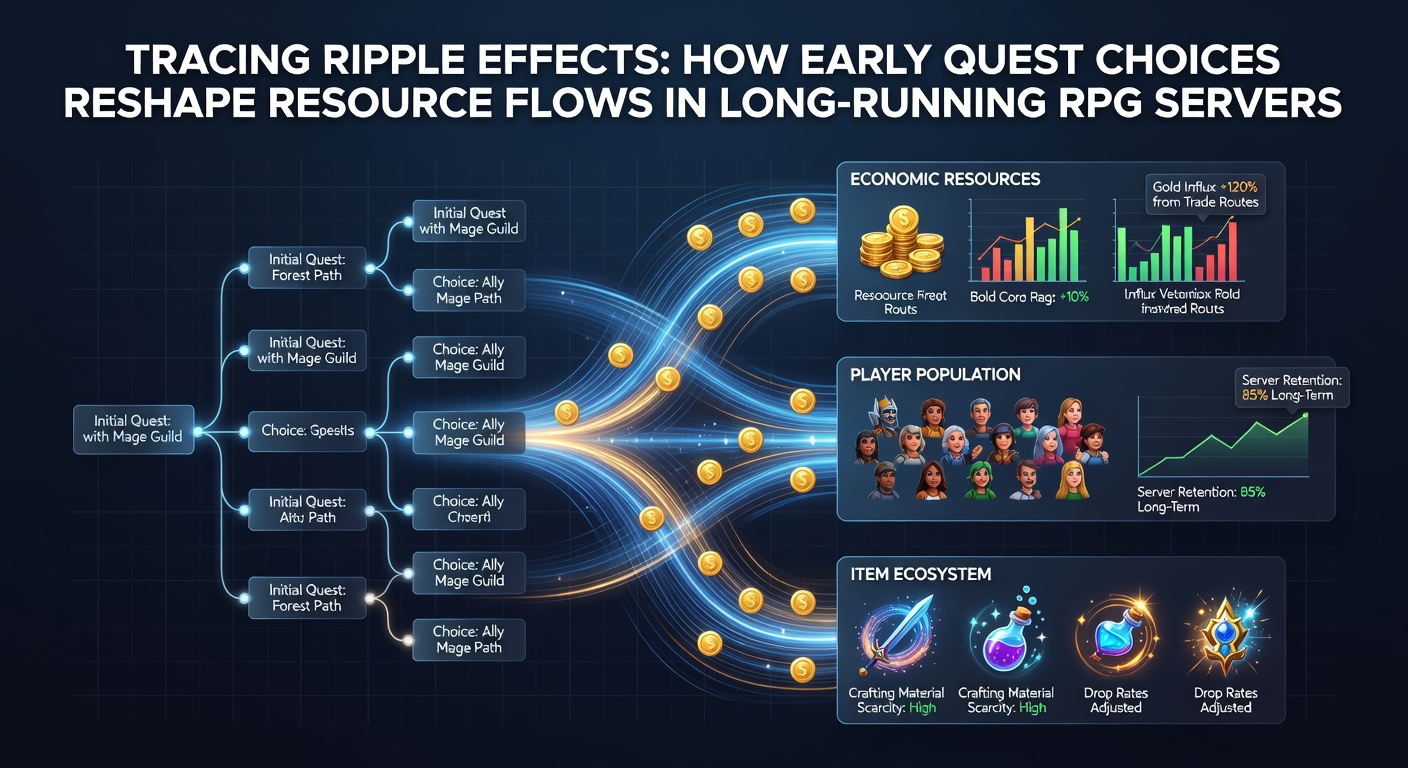
Long-Term Server-Wide Economic Structures
Over multi-year timescales the initial quest branches influence not only material availability but also the emergence of player-controlled monopolies on rare drops that appear only after certain reputation lines are completed. Observers tracking one North American server cluster documented how factions that received early quest support for diplomatic routes gained exclusive access to vendor recipes for high-demand consumables, and those factions maintained price leadership even after developers added alternative acquisition methods years later. The same pattern appears in Australian-hosted servers where early combat-oriented choices funneled resources into weapon upgrade paths, resulting in sustained demand for enhancement stones that kept mining guilds profitable long after herb markets stabilized.
Server administrators occasionally adjust global drop tables in response to these imbalances, yet adjustments rarely erase the foundational asymmetries because legacy characters retain their accumulated advantages and continue to shape auction-house liquidity. Studies from the Centre for Digital Games Research at a Canadian university indicate that resource-flow networks in decade-old RPG servers exhibit small-world properties where a handful of early quest pathways account for the majority of high-volume transactions observed in current logs.
Player Migration and Adaptation Patterns
New players entering mature servers encounter resource landscapes already shaped by prior decisions, and many adopt compensatory strategies such as focusing on under-supplied niches or joining established trade guilds that control distribution. These adaptations create secondary ripple effects because late entrants often accelerate depletion of the remaining scarce nodes, prompting server-wide events or developer interventions that further alter flow dynamics. Data logs reveal cyclical spikes in resource prices every time fresh cohorts complete the same starter quests that set the original conditions, demonstrating how the early choices continue to echo through successive player generations.
Conclusion
Resource flows in long-running RPG servers carry the imprint of early quest selections through fixed mechanics, compounding economic behaviors, and persistent player networks that adapt around those initial conditions. Tracking these effects requires longitudinal analysis of server data rather than snapshot observations, and the patterns hold across multiple titles because core systems of node timers, recipe ratios, and reputation gating remain structurally similar. As servers continue into 2026 and beyond, the cumulative influence of those first decisions will keep determining which resources remain abundant and which stay constrained for the communities that inhabit them.