Shifting payout matrices: how regulatory tweaks recalibrate jackpot frequencies across digital slot networks and live dealer tables
Mara Berger · Jun 3, 2026

Shifting payout matrices: how regulatory tweaks recalibrate jackpot frequencies across digital slot networks and live dealer tables
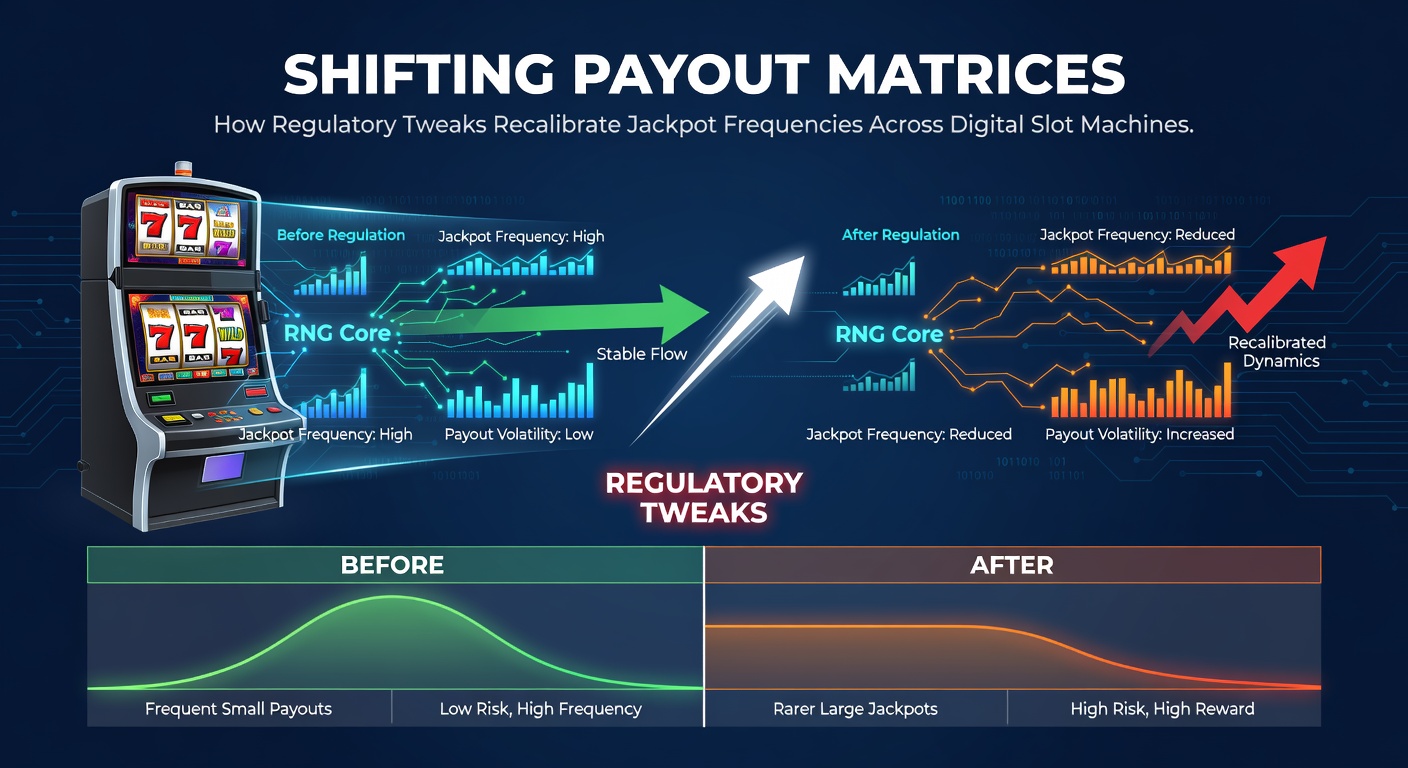
Regulatory bodies across multiple jurisdictions continue to adjust contribution rates and reserve requirements that feed into progressive jackpot pools, and these changes directly influence how often those jackpots trigger on both automated slot networks and live dealer environments. Data from industry monitoring services shows that when a regulator raises the minimum percentage of each wager allocated to a shared jackpot, the pool grows faster yet the mathematical threshold for a win stretches accordingly, which recalibrates expected frequency without altering the underlying random number generator.Mechanics of Payout Matrix Adjustments
Operators maintain payout matrices that define how base game returns and jackpot contributions interact, and small shifts in these matrices propagate through entire networks because digital slots often link across multiple sites while live dealer tables feed into the same progressive meters via side bets or dedicated jackpot wagers. When authorities in one region modify the allowable range for jackpot seeding or the decay rate of unused portions, network operators must recalculate hit frequencies to stay compliant, and this process typically involves updating the weighting of prize tiers across thousands of connected machines within weeks of the rule change taking effect.
Regional Regulatory Examples and Timing
European markets have seen several coordinated adjustments in recent cycles, and similar patterns appear in North American and Asian-Pacific licensing frameworks where digital and live environments operate under unified oversight. Figures released ahead of planned implementations indicate that certain rule revisions scheduled for June 2026 will require operators to increase the proportion of wagers directed to local jackpots rather than global ones, which narrows the pool size for any single trigger event and therefore raises the statistical likelihood of more frequent but smaller payouts on both slot networks and live dealer tables.
One study examining linked progressive systems found that a 0.25 percent increase in mandatory contribution rates extended average jackpot cycles by approximately 18 percent while simultaneously elevating the number of secondary prizes awarded during the same period, and these outcomes appear consistently across both fully automated platforms and hybrid live dealer setups that incorporate electronic betting terminals.
Impact on Digital Slot Networks
Digital slot networks rely on centralized jackpot controllers that aggregate contributions from every participating game, and regulatory tweaks often target the algorithms governing reserve funds that prevent negative balances after large wins. When these reserves must be maintained at higher levels, operators respond by lengthening the cycle between major payouts, which shows up in player-facing data as reduced frequency of top-tier hits even though overall return-to-player percentages remain stable.
Effects on Live Dealer Table Configurations
Live dealer tables introduce additional variables because jackpot eligibility frequently depends on specific side bet structures that regulators can restrict or expand, and changes here affect frequency differently than in pure digital environments. Observers tracking multi-jurisdiction operators note that when live dealer side bets face tighter contribution caps, the resulting jackpot pools accumulate more slowly, which compresses the distribution curve and produces more regular but modest wins compared with unrestricted digital-only networks.
According to reports published by the Malta Gaming Authority, adjustments to progressive contribution rules in 2025 produced measurable shifts in hit rates across monitored titles, and similar documentation from the New Jersey Division of Gaming Enforcement confirms parallel effects in regulated online environments that include both slots and live dealer offerings. Research from the University of Nevada's gaming studies program further indicates that these recalibrations maintain overall house edges while redistributing prize frequency, and the pattern holds whether the underlying platform uses virtual reels or physical cards and wheels.
Network-Wide Recalibration Processes
Operators typically complete matrix updates through phased rollouts that allow testing across sample player cohorts before full deployment, and this approach minimizes disruption while satisfying audit requirements from multiple licensing authorities simultaneously. The ball remains in the operators' court to demonstrate that revised frequencies align with advertised expectations, and independent testing laboratories verify compliance through simulation runs that model millions of game cycles under the new parameters.
Conclusion
Regulatory tweaks to payout matrices continue to reshape jackpot behavior across interconnected digital slot networks and live dealer tables by altering contribution rates, reserve requirements, and side bet structures, and the effects manifest as measurable changes in trigger frequencies without compromising stated return percentages. Data collected through June 2026 implementations will provide further clarity on how these adjustments balance player engagement with jurisdictional oversight across global markets.