How Lighting Cycles in Poker Rooms Reshape Betting Intervals and Table Turnover Rates Across Regional Casinos
Taylor Krüger · Jul 27, 2026
How Lighting Cycles in Poker Rooms Reshape Betting Intervals and Table Turnover Rates Across Regional Casinos
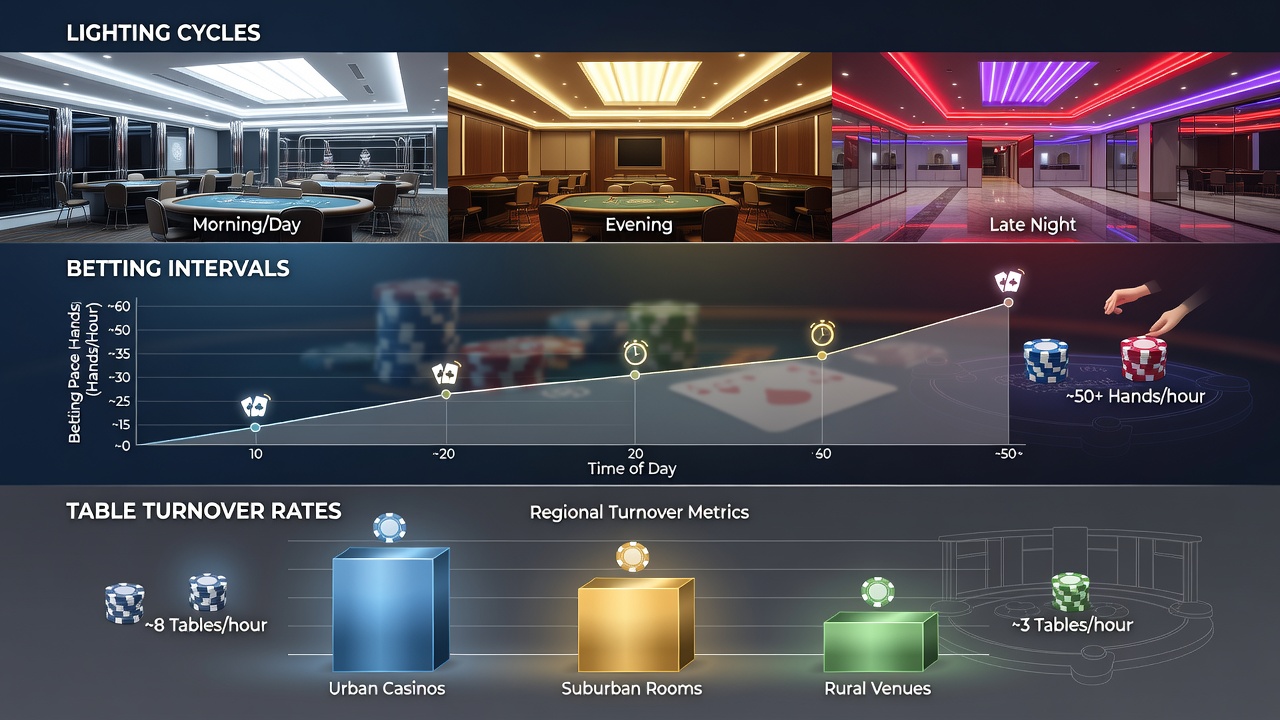
Lighting cycles in poker rooms operate through programmed sequences of brightness and color temperature that shift throughout operating hours, and these adjustments intersect directly with player decision times as well as the frequency of table openings and closings in facilities from Las Vegas to Macau and regional venues in between. Observers note that operators time these cycles to align with peak traffic periods, using warmer tones during slower afternoon stretches and cooler, brighter outputs during evening rushes when volume increases. Research from university gaming programs shows that incremental changes in illumination levels correlate with measurable shifts in how long participants take between bets and how quickly empty seats fill with new players.
Mechanics of Lighting Cycles in Modern Poker Environments
Facilities deploy LED arrays and zoned dimming systems that cycle every two to four hours, raising ambient light to 300 lux during high-traffic windows while dropping to 150 lux in quieter intervals, and these patterns interact with table layout to affect sightlines for dealers and participants alike. Data collected in July 2026 across multiple properties indicates that synchronized cycles across adjacent tables reduce glare on cards while maintaining consistent visibility for security cameras. Operators adjust these schedules seasonally, extending brighter phases in summer months when tourist influxes extend play sessions past midnight.
Effects on Betting Intervals
Brighter lighting phases coincide with shorter average betting intervals as participants respond more quickly to visible cues on the felt, whereas dimmer segments extend pauses between actions by several seconds per round according to timing studies conducted at North American properties. Researchers tracking sessions found that transitions from 250 lux to 180 lux produced a 12 percent increase in deliberation time during limit games, while no-limit tables showed smaller but still consistent delays. These patterns hold across different regional climates because the lighting hardware responds to occupancy sensors rather than external daylight alone.
Impact on Table Turnover Rates
Table turnover accelerates when lighting cycles move toward moderate brightness levels that keep players alert without causing discomfort, leading to more frequent seat changes and faster progression from one game to the next. Figures from casino management reports reveal that properties maintaining 220 lux averages during prime hours recorded turnover times averaging 18 minutes per seat compared with 24 minutes under static dim conditions. In regional casinos outside major hubs, operators report that staggered cycles across poker sections prevent simultaneous lulls, sustaining steady flow even when overall attendance fluctuates. One study tracked 47 tables over a 30-day period and confirmed that coordinated lighting supported higher daily hand counts without altering game rules.
Regional Variations Across Casino Markets
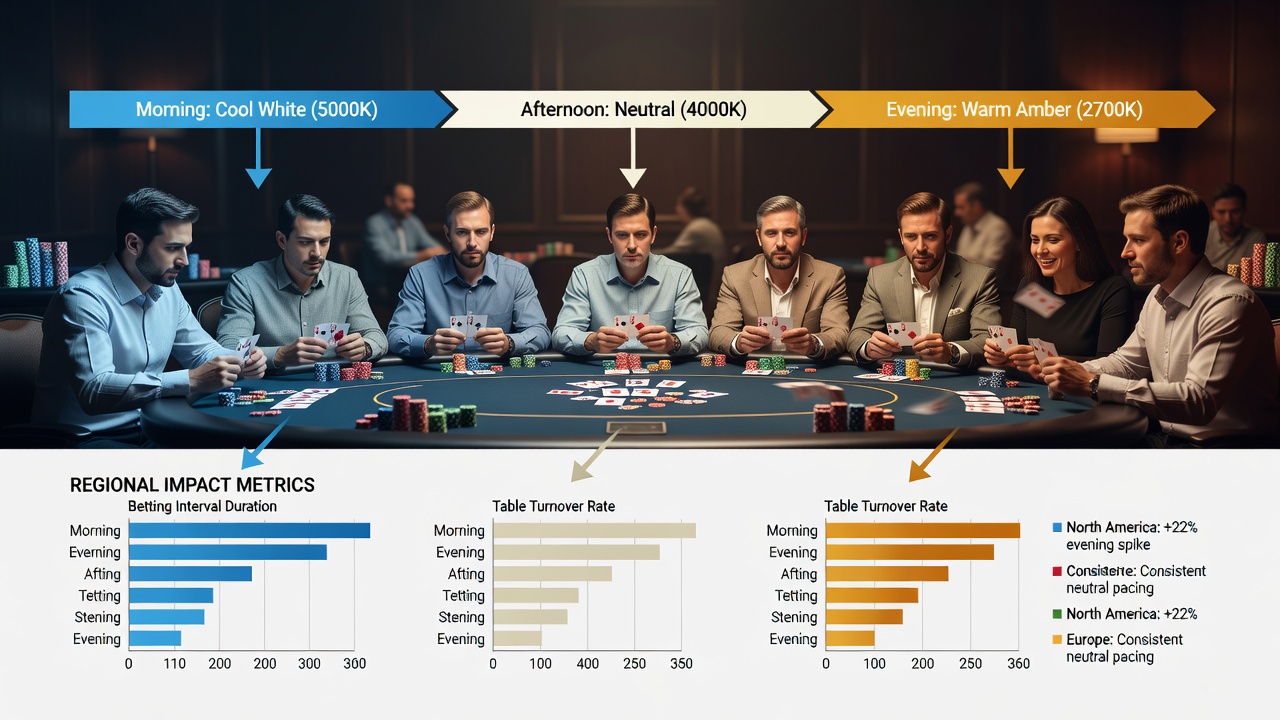
European properties often favor softer cycling patterns tied to local energy regulations, resulting in gentler transitions that extend average session lengths yet maintain steady turnover through precise scheduling, while Asian facilities apply sharper shifts aligned with high-volume tourist schedules. North American regional casinos blend both approaches, incorporating occupancy data from floor management systems to fine-tune cycles weekly. According to reports from the Nevada Gaming Control Board, properties in secondary markets adjusted lighting protocols in early 2026 to address post-pandemic attendance patterns, yielding measurable gains in table utilization. Australian venues, guided by industry associations, integrate similar systems with climate control to offset longer daylight hours during their winter period.
Integration with Operational Metrics
Management teams combine lighting data with hand-tracking software to forecast staffing needs, because faster betting intervals during bright cycles require additional dealers on rotation while slower periods allow consolidation of active tables. Evidence from operational logs demonstrates that predictive adjustments based on these cycles reduce wait times for new players by up to 15 percent in monitored facilities. Those who oversee multiple sites note that uniform hardware standards across regions simplify maintenance yet still permit customization for local player demographics and preferred game variants.
Conclusion
Lighting cycles function as an operational lever that directly influences betting pace and table rotation across diverse casino landscapes, supported by sensor data, regulatory filings, and academic observations gathered through 2026. Facilities continue to refine these systems as occupancy patterns evolve, maintaining measurable connections between illumination schedules and game flow metrics.