Dealer Glove Fabrics: Material Choices and Their Effects on Card Friction in Baccarat Pits
Kai Peters · Jul 10, 2026
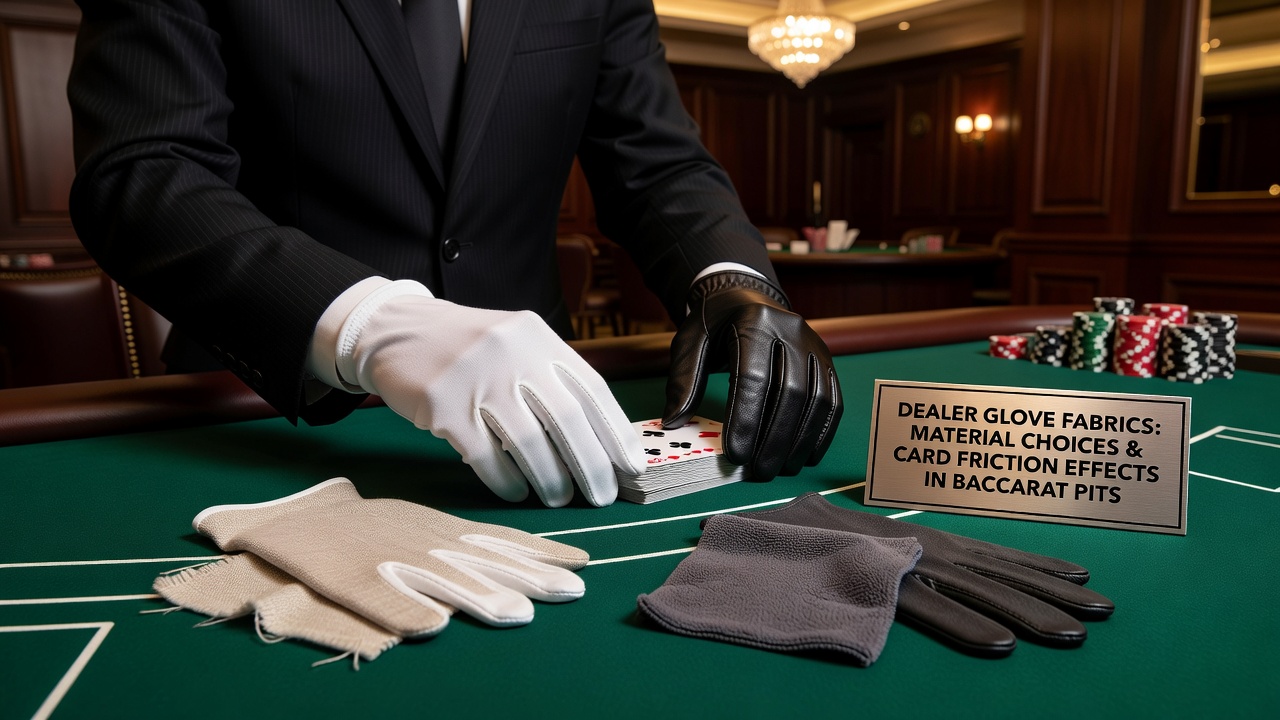
Dealer Glove Fabrics: Material Choices and Their Effects on Card Friction in Baccarat Pits
Baccarat pits rely on precise card manipulation where glove materials directly influence how cards slide and grip during dealing sequences. Manufacturers select fabrics based on measured friction coefficients that interact with standard playing card finishes made from plastic-coated paper or linen stock. Data from casino equipment suppliers shows that cotton blends produce higher static friction values around 0.45 to 0.55 when paired with typical card surfaces while synthetic options often register lower ranges between 0.25 and 0.35 under controlled laboratory conditions.Common Glove Materials Used in High-Volume Pits
Casino operators in major jurisdictions including Nevada and Macau stock gloves constructed from cotton, nylon, polyester blends, and nitrile-coated textiles because each type alters the force required for dealers to lift and slide cards across felt layouts. Cotton gloves absorb ambient moisture which raises friction over extended shifts while nylon and polyester maintain more stable readings across humidity fluctuations documented in climate-controlled environments. Nitrile layers add a thin barrier that reduces direct fiber contact with card edges yet still permits enough grip for accurate placement during multi-deck shoe draws.
Research conducted by textile testing facilities indicates that glove thickness also plays a measurable role since layers exceeding 0.8 millimeters increase drag coefficients regardless of base material composition. Dealers rotate through gloves at intervals specified by pit supervisors to prevent buildup of oils and particulates that shift friction properties mid-session.
Friction Dynamics During Card Handling
Card friction affects every motion from the initial draw out of the shoe through the reveal process where cards land face-up in designated player and banker positions. Lower-friction synthetics allow faster extraction speeds but require dealers to adjust grip pressure to avoid overshooting target zones on the layout. Higher-friction cotton options slow the motion slightly yet provide consistent resistance that reduces accidental drops when humidity levels rise during peak evening hours in July 2026 across resort properties in Las Vegas and Atlantic City.
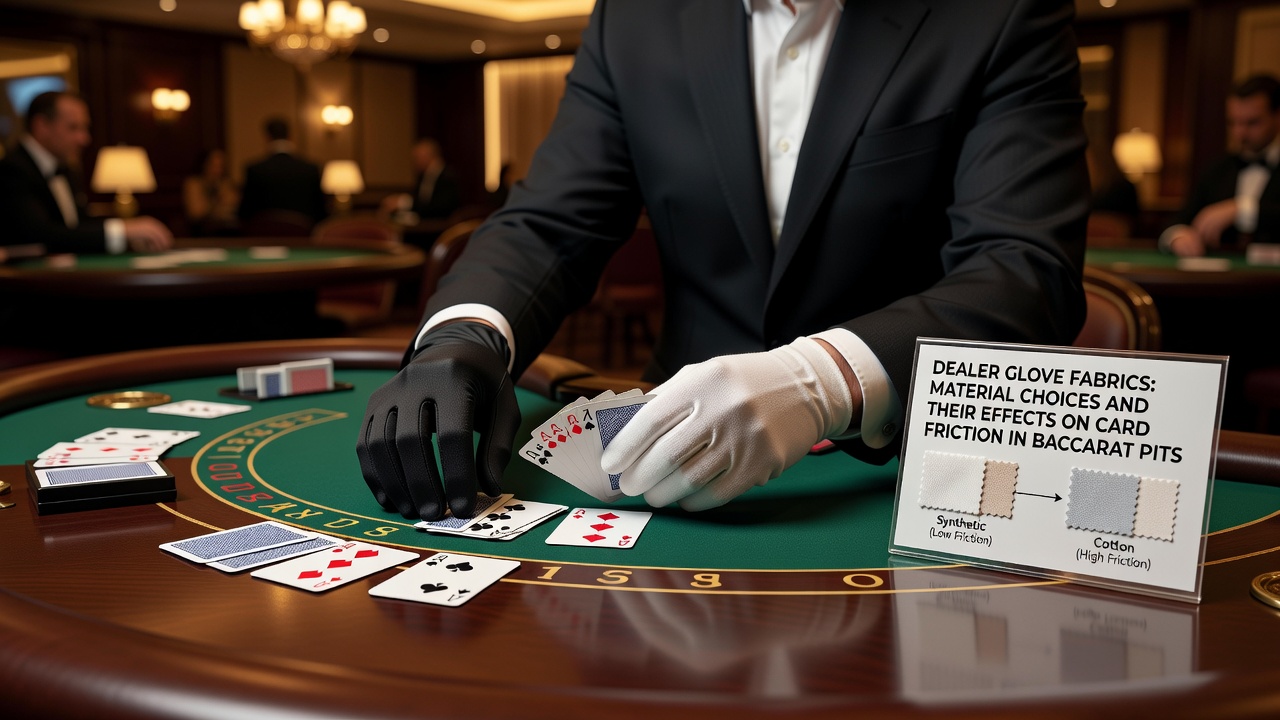
Studies published in applied ergonomics journals document that friction mismatches between gloves and cards correlate with increased wrist strain over thousands of hands dealt per shift. Facilities track these patterns through internal performance logs that record misdeals and timing variances tied to specific glove batches. Australian gaming authorities have referenced similar material performance data when reviewing equipment standards for live table games.
Operational Adjustments and Material Selection
Pit managers coordinate with suppliers to match glove fabrics to seasonal environmental conditions because temperature variations between 18 and 24 degrees Celsius alter polymer behavior in synthetic gloves. Cotton-dominant models require more frequent replacement cycles in drier climates where static buildup becomes noticeable during extended dealing sequences. Facilities maintain inventory records that show average glove lifespan measured in hands dealt before friction degradation exceeds acceptable thresholds set by internal quality controls.
One documented case involved a Macau property that switched from polyester to a cotton-nylon hybrid after monitoring revealed a 12 percent reduction in handling speed during humid summer months according to operational reports shared at industry conferences. Regulatory bodies such as the Nevada Gaming Control Board oversee equipment compliance yet leave specific fabric decisions to individual operators who balance durability against performance metrics collected on the floor.
Maintenance Practices That Preserve Friction Properties
Glove care protocols include scheduled washing with approved detergents that avoid residue buildup capable of changing surface texture and therefore friction values. Storage conditions matter because prolonged exposure to direct light degrades certain synthetic fibers faster than natural ones leading to inconsistent handling across dealer rotations. Training programs instruct staff on proper donning techniques that prevent overstretching which thins material and reduces intended grip characteristics over time.
Equipment audits conducted quarterly verify that issued gloves continue to meet baseline friction standards through simple slide tests performed on sample cards identical to those in active play. These checks help maintain uniform dealing speeds across all tables within a single baccarat pit section.
Conclusion
Material selection for dealer gloves remains an operational variable that directly shapes card movement efficiency in baccarat environments. Properties such as fiber composition, thickness, and environmental response determine measurable friction outcomes that influence both speed and consistency during live play. Continued monitoring through performance data and equipment standards ensures that chosen fabrics align with the physical requirements of sustained dealing across high-volume pits worldwide.