Card Flow Dynamics: Tracing Shuffle Sequences and Their Impact on Table Turnover Rates in Multi-Deck Blackjack Environments
Morgan Simon · Aug 14, 2026

Card Flow Dynamics: Tracing Shuffle Sequences and Their Impact on Table Turnover Rates in Multi-Deck Blackjack Environments
Multi-Deck Configurations and Basic Mechanics
Multi-deck blackjack setups typically employ six or eight standard decks combined in a single shoe, and these arrangements alter the pace at which cards move through play cycles while maintaining house procedures that govern penetration levels before reshuffling occurs. Observers note that dealers follow standardized protocols established by regulatory bodies, which dictate when a shuffle begins based on the remaining card count rather than arbitrary timing. Research from casino operations indicates that this structure creates measurable intervals between rounds, with the physical act of shuffling consuming time that directly reduces the number of hands completed per hour at each table.
Shuffle sequences break down into distinct phases including extraction of cards from the discard tray, verification of deck integrity, and restacking into the shoe. Those who monitor floor activity find that manual shuffles in six-deck games often extend between 45 and 90 seconds depending on the dealer's technique and the presence of automatic verification steps. Data collected across large casino floors shows these pauses accumulate across multiple tables, producing observable differences in overall session throughput when compared to venues that deploy continuous shuffling machines.
Shuffle Sequence Variations Across Venues
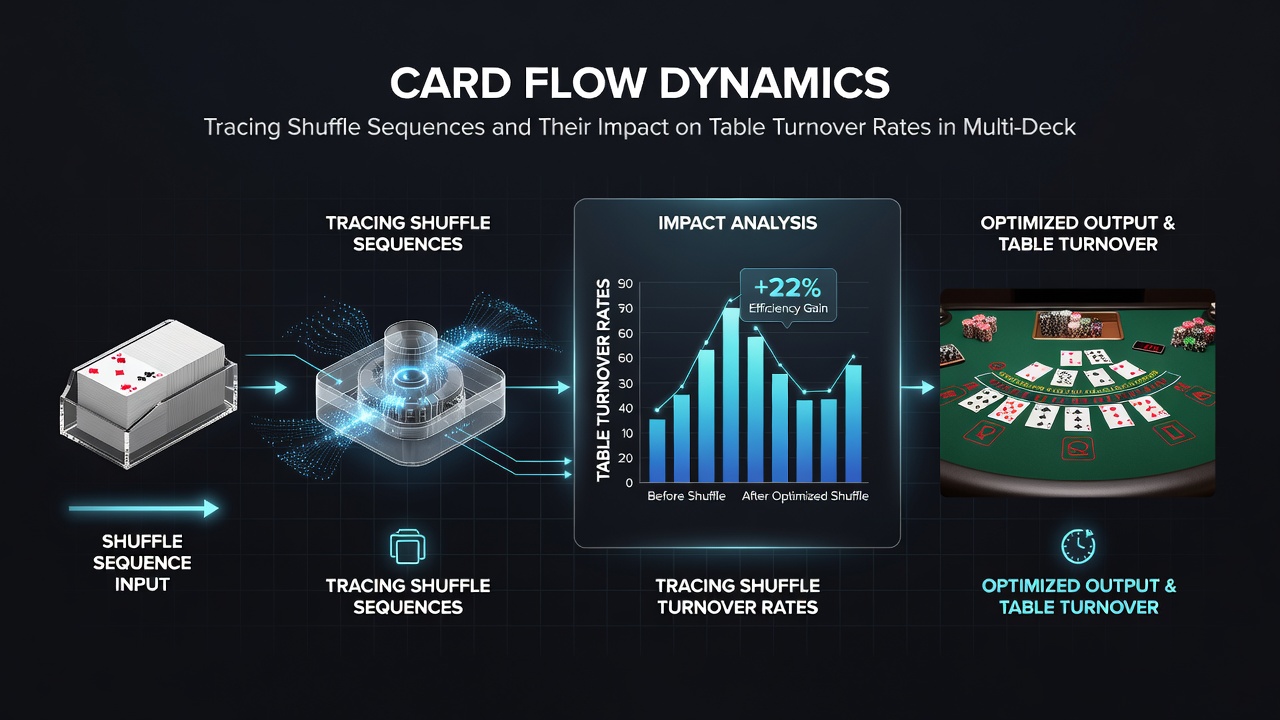
Automatic shufflers operate by continuously mixing discarded cards back into the active pool, which eliminates the traditional pause for full reshuffles and maintains a steady supply of randomized cards throughout extended play periods. Studies conducted by gaming research groups reveal that continuous systems increase hands per hour by approximately 20 to 30 percent in controlled environments, because the machine handles mixing while players place bets and receive cards. Yet manual shuffling persists in many high-limit rooms where regulations or operational preferences require direct dealer handling of the decks at set intervals.
Penetration depth, defined as the percentage of the shoe dealt before reshuffling, further modulates these dynamics since deeper penetration allows more rounds between shuffles while shallower cuts trigger earlier interruptions. Figures released by the Nevada Gaming Control Board document average penetration settings that range from 75 to 85 percent in multi-deck games, and these parameters correlate with recorded variations in table activity rates during peak evening shifts. In August 2026, several properties adjusted their internal guidelines in response to updated operational audits, resulting in measurable shifts in how frequently shoes reached the shuffle point.
Dealers rotate at scheduled intervals that coincide with shuffle cycles in many establishments, creating synchronized windows where both card handling and personnel changes occur together. This coordination reduces cumulative downtime because a fresh dealer can assume position during the final stages of a manual shuffle rather than interrupting an active round. Analysts tracking workforce patterns observe that such alignment helps maintain consistent flow even when multiple tables operate simultaneously across a single pit.
Measured Effects on Table Turnover Rates
Table turnover rates reflect the combined outcome of hands completed, player seating changes, and the time required to reset the shoe for the next cycle. Evidence gathered from floor management systems demonstrates that venues using continuous shuffling machines sustain higher average turnover because the absence of full manual resets keeps cards in motion and players engaged without extended breaks. One longitudinal review of eight-deck games found that turnover increased when shuffle frequency dropped below one occurrence every 60 hands, while more frequent interventions produced the opposite effect across comparable table counts.
External factors such as regulatory updates on game speed and internal staffing models also shape these outcomes. Reports from the Australian Gambling Research Centre highlight how regional standards influence the adoption of mechanical versus manual methods, leading to documented differences in session length and table utilization when operators compare sites across jurisdictions. Observers monitoring peak summer periods note that these variables compound when visitor volume rises, because higher demand pressures facilities to optimize every available minute of active play.
Card flow tracking software now records timestamps at each shuffle initiation and completion, generating datasets that allow managers to identify bottlenecks in specific sequences. These records show that verification steps, such as counting and spreading cards for inspection, add consistent seconds that scale across an entire shift when dozens of tables run in parallel. Adjustments to verification protocols have produced incremental gains in some locations without altering the underlying randomization requirements.
Conclusion
Shuffle sequences in multi-deck blackjack environments directly determine the intervals between playable rounds and therefore set the upper limits on table turnover rates. Continuous systems and optimized manual procedures each produce distinct throughput profiles that operators measure through hands-per-hour metrics and staffing alignment. Data from regulatory and research sources continues to guide refinements in both equipment deployment and procedural timing, maintaining consistent standards across evolving operational conditions.