Alliance Architectures: Structuring Temporary Coalitions for Resource Dominance in Dynamic Battle Royale Lobbies
Taylor Krüger · Jun 29, 2026
Alliance Architectures: Structuring Temporary Coalitions for Resource Dominance in Dynamic Battle Royale Lobbies
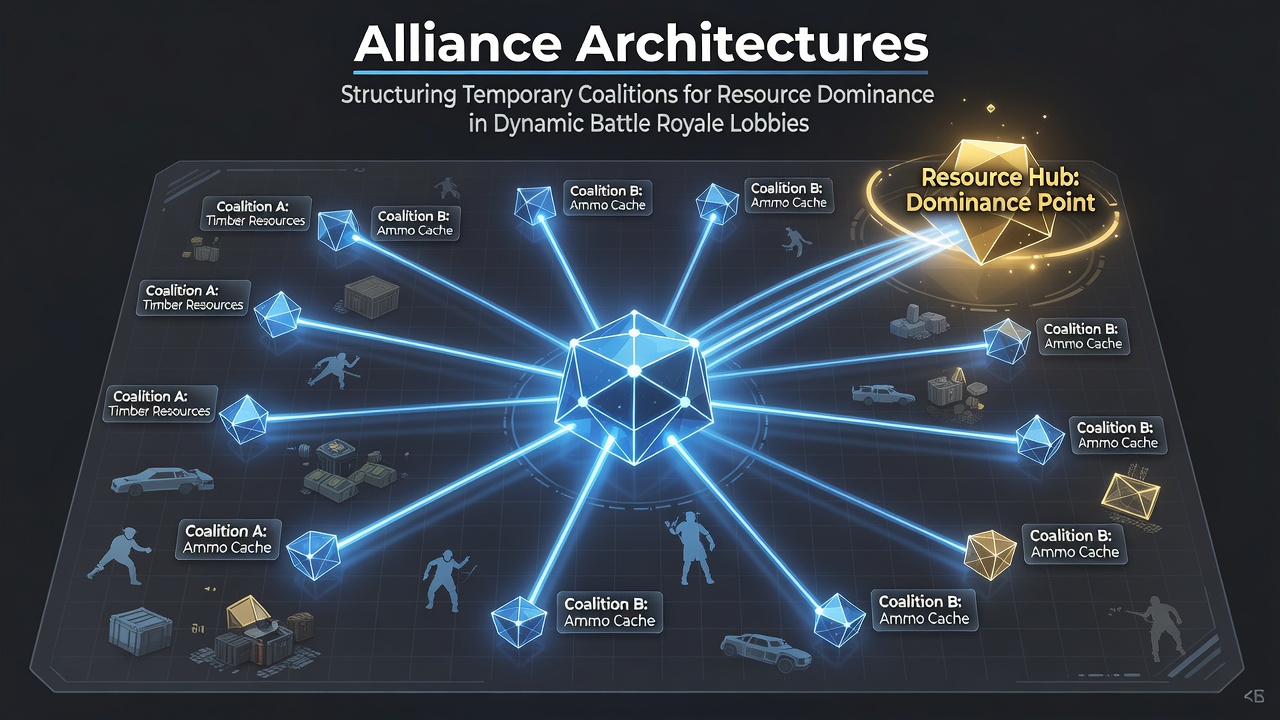
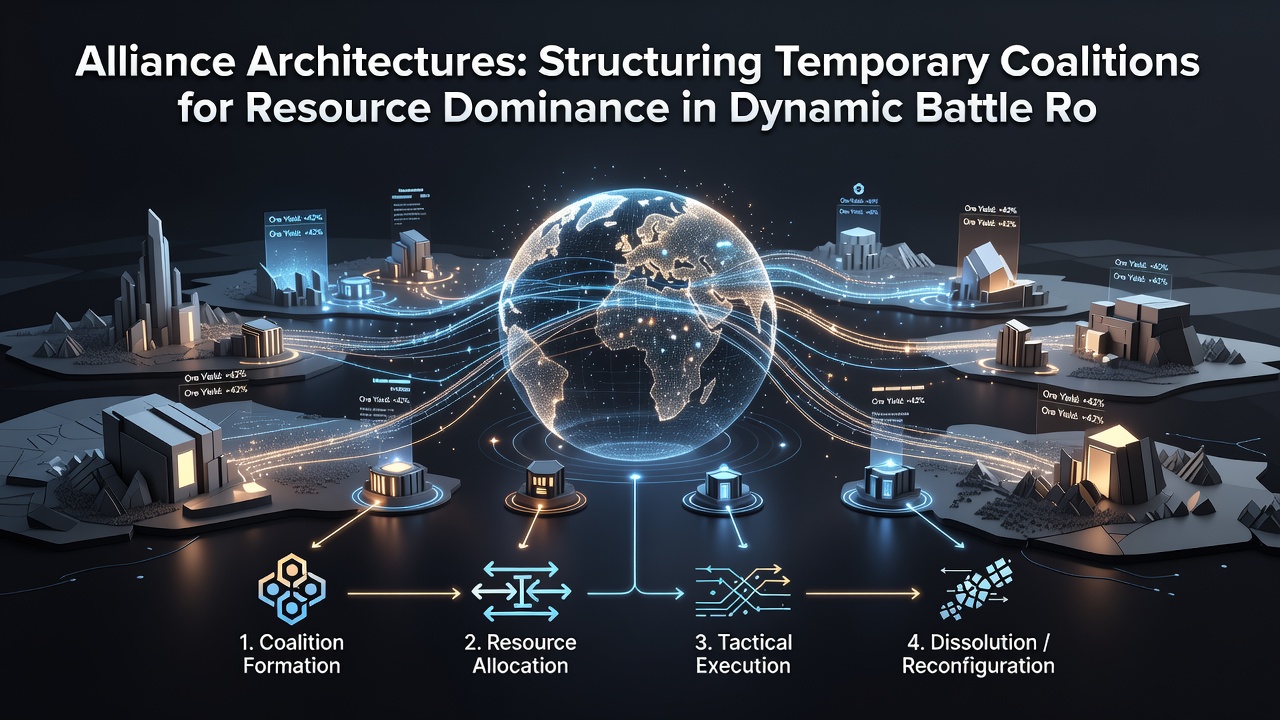
Battle royale lobbies present environments where individual players often combine efforts into short-lived coalitions that focus on controlling high-value resource nodes and dictating rotation paths, and these arrangements adapt continuously as player counts decline and safe zones contract. Data from major titles indicates that coordinated groups achieve higher extraction rates of ammunition, armor upgrades, and vehicle assets compared with solo participants during the mid-game phase. Observers note that successful coalitions rely on predefined role assignments, shared communication protocols, and exit conditions that activate once resource thresholds are met.
Core Structural Elements
Coalition frameworks typically begin with a lead caller who designates primary and secondary resource targets based on drop patterns and early ring predictions, while supporting members handle scouting and perimeter defense. Communication occurs through layered channels that combine in-game ping systems with external voice applications, allowing rapid updates on enemy movements and loot redistribution. Research from multiplayer interaction studies shows that groups maintaining three to five members sustain cohesion longer than larger clusters because decision latency remains low during high-pressure engagements.
Resource dominance emerges when coalitions establish temporary control over contested areas such as supply bunkers or elevated compounds, and participants enforce access rules through synchronized overwatch positions. Exit clauses embedded in these structures activate once collective inventory goals are satisfied, prompting members to dissolve the agreement and pursue individual scoring paths. Figures from platform telemetry reveal that coalitions employing clear dissolution triggers reduce internal friction and maintain higher average survival times through the final circles.
Adaptation in June 2026 Seasons
Game updates released across several battle royale platforms in June 2026 introduced enhanced ping-sharing tools and dynamic marker systems that allow coalitions to tag resource priorities without breaking stealth protocols. These features enable faster recalibration when lobby compositions shift due to early eliminations or unexpected third-party intrusions. Analysts tracking player behavior report that coalitions utilizing the new marker layers improved their loot consolidation speed by measurable margins in the opening weeks of the season.
Population spikes during June 2026 events also altered coalition longevity, as increased lobby density forced groups to negotiate shorter truce windows around contested hotspots. Teams that pre-established fallback resource sites demonstrated greater flexibility when primary targets became overcrowded. Data compiled by regional gaming associations indicates that adaptive coalition models outperformed rigid structures in these denser environments.
Communication and Role Distribution
Effective coalitions assign distinct responsibilities such as forward observer, resource accountant, and rotation coordinator, and these roles rotate based on loadout specialization rather than fixed player identity. Voice discipline protocols limit chatter to critical updates, preserving bandwidth for real-time threat assessment. Studies conducted by academic research groups on team dynamics confirm that role clarity correlates with reduced misallocation of shared supplies during extended engagements.
External voice platforms supplement in-game tools by providing persistent channels that survive lobby resets, yet many coalitions restrict access to verified members to prevent information leaks. Ping-based signaling handles positional updates while voice handles strategic pivots, creating a hybrid information flow that balances speed and security. Platform statistics from major titles show that coalitions balancing both channels maintain coordination through multiple zone closures more consistently than those relying on single methods.
Resource Allocation Protocols
Shared inventories operate under contribution-based distribution models where members log incoming items and receive allocations according to role needs and future utility projections. This system minimizes hoarding disputes and ensures that critical assets like high-tier helmets or vehicle fuel reach the players positioned to deploy them effectively. Industry reports compiled by the Entertainment Software Association highlight measurable gains in group efficiency when allocation follows transparent contribution logs rather than ad-hoc decisions.
Vehicle and mobility resources receive priority tracking because they determine rotation timing and escape options, and coalitions often designate a single driver to maintain accountability. When multiple vehicles become available, secondary units are assigned to flanking or scouting roles that support the main convoy. Telemetry from recent seasons demonstrates that coalitions managing mobility assets through centralized assignment sustain higher placement rates across varied map layouts.
Conclusion
Temporary coalition structures in battle royale settings combine defined roles, hybrid communication methods, and explicit resource protocols to convert individual actions into collective advantages. Updates implemented in June 2026 seasons expanded the tooling available for these arrangements, enabling quicker adaptation to changing lobby conditions. Platform data and interaction research continue to document how these architectures influence extraction outcomes and survival metrics across dynamic match environments.